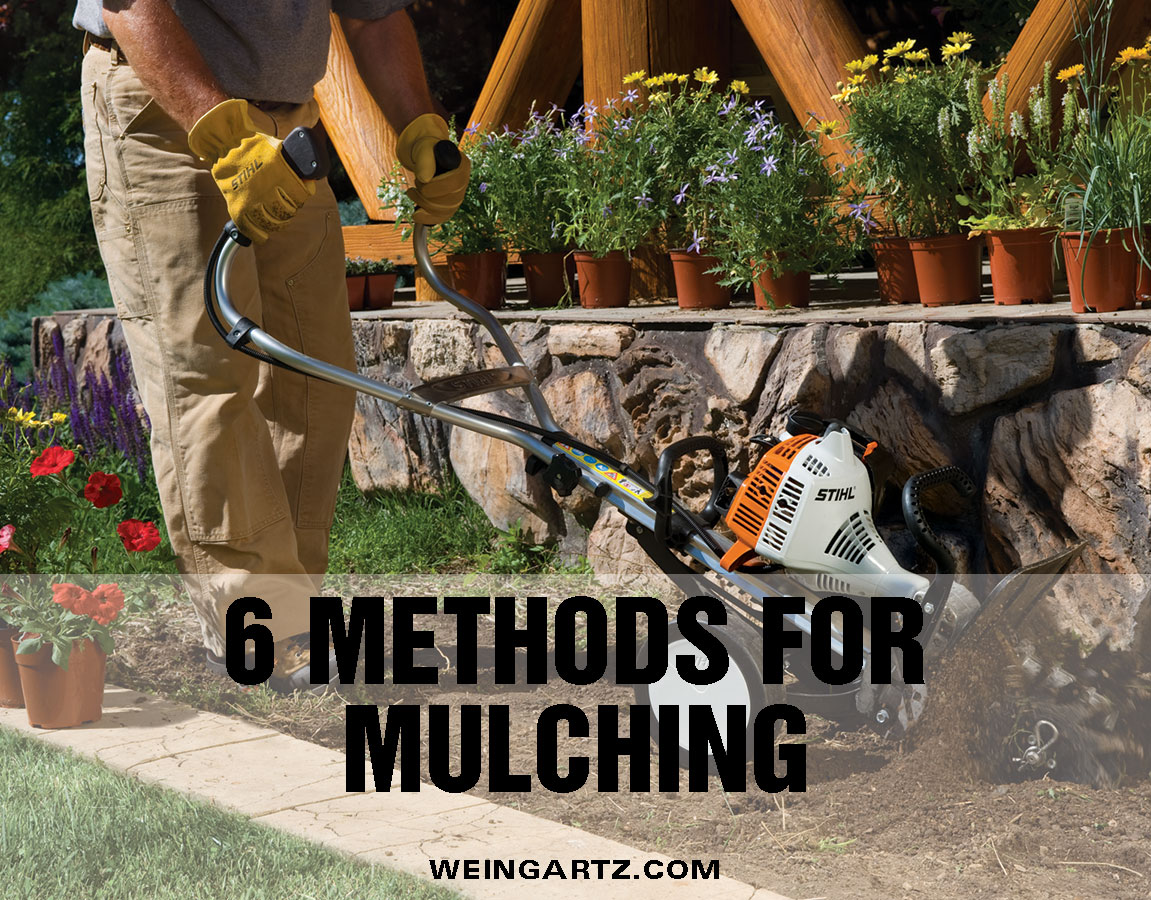

Mulch has a variety of benefits including increasing the health of your lawn and garden, discouraging weeds and preventing alternate freezing and thawing in the winter. There are a number of mulching methods and it’s not one size fits all. Read more to learn about these methods and which one is right for you.
1 – Organic Mulch
Organic mulches promote healthier lawn and gardens as they improve the soil as they decompose and discourage weeds. Organic mulches include formerly living material such as grass clippings, shredded leaves, straw, compost, and wood chips.
2 – Grass Clippings
Recycling grass clippings is one of the simplest mulching options. After mowing, simply collect the grass clippings to use as mulch. These clippings are great for your lawn as they’re nitrogen-rich. That being said, grass clippings should occasionally be returned directly to your lawn because they act as a natural fertilizer.
3 – Shredded Leaves or Wood Chips
Shredded leaves create nutrient-rich mulch for your lawn and garden. If you have any trees on your property, then you have access to shredded leaves for free. Shred the fallen leaves with a leaf-shredding machine or a lawn mower with a bagger, which will collect the leaves and cut them into the perfect mulching size.
You can buy a bag of wood chips from your local garden store. Wood chips and shredded leaves are great as mulch but also add a visual appeal to your yard, especially when used in flower beds and shrub borders.
4 – Straw or Hay
Straw and hay are good mulch for vegetable gardens. They have most of the benefits of other mulches including retaining moisture in your soil and keeping weeds away. If you’re mulching with hay, make sure it’s weed-free or you risk making trouble for your vegetable garden.
5 – Compost
Compost is organic material that has been decomposed and recycled as a fertilizer. Compost can be used as mulch because it will strengthen your soil. It’s a good idea to spread a thin layer of compost around plants and place another mulch on top of it. This keeps your compost moist and your plants healthy.
6 – Inorganic Mulch
Inorganic mulches include gravel, stones, black plastic, and geotextiles – also known as landscape fabrics. Inorganic mulches, like organic ones, keep weeds away. They don’t, however, decompose to enrich your soil but are the method of choice under certain circumstances.
Black plastic transmits the sun’s heat to the soil beneath and radiates heat during the night. Since the plastic film stays warm and dry, it protects certain fruits and vegetables. This mulch also prevents weed growth and retains soil moisture. Unlike black plastic, gravel, stones, and geotextiles (landscape fabrics) allow air and water to reach the soil beneath while keeping weeds away.
Do your research and talk to your lawn care professionals before choosing a mulching method. Mulched yards and gardens are healthier and house fewer weeds than unmulched ones, but each mulching method has a different set of benefits for your lawn, plants, and gardens.
You May Also Enjoy These Articles:
How to Maintain the Perfect Lawn
Essential Equipment for Lawn Maintenance
5 Lawn Mower Tune Up Tips for Spring
Why Weingartz?
Weingartz, family owned and operated, began in 1945 as a farm supply store for local Michigan families. In the 1970s, we began to focus exclusively on outdoor power equipment. Over time, we morphed into the “power equipment superstore” that now defines all of our locations. The staff and experts at Weingartz work diligently to provide the best service possible and give honest and helpful advice to each and every customer.
Weingartz also sells parts for all outdoor power equipment at https://weingartz.com/parts-lookup.
39050 Grand River Ave.
Farmington Hills, MI 48335
(248) 471-3050
info@weingartz.com
Connect With Us!
https://www.facebook.com/WeingartzLawnToSnow
http://pinterest.com/MrWeingartz
Learn More About Brand Specific Lawn Mowers


Sign up for our electronic monthly newsletter for discounts and money-saving tips.