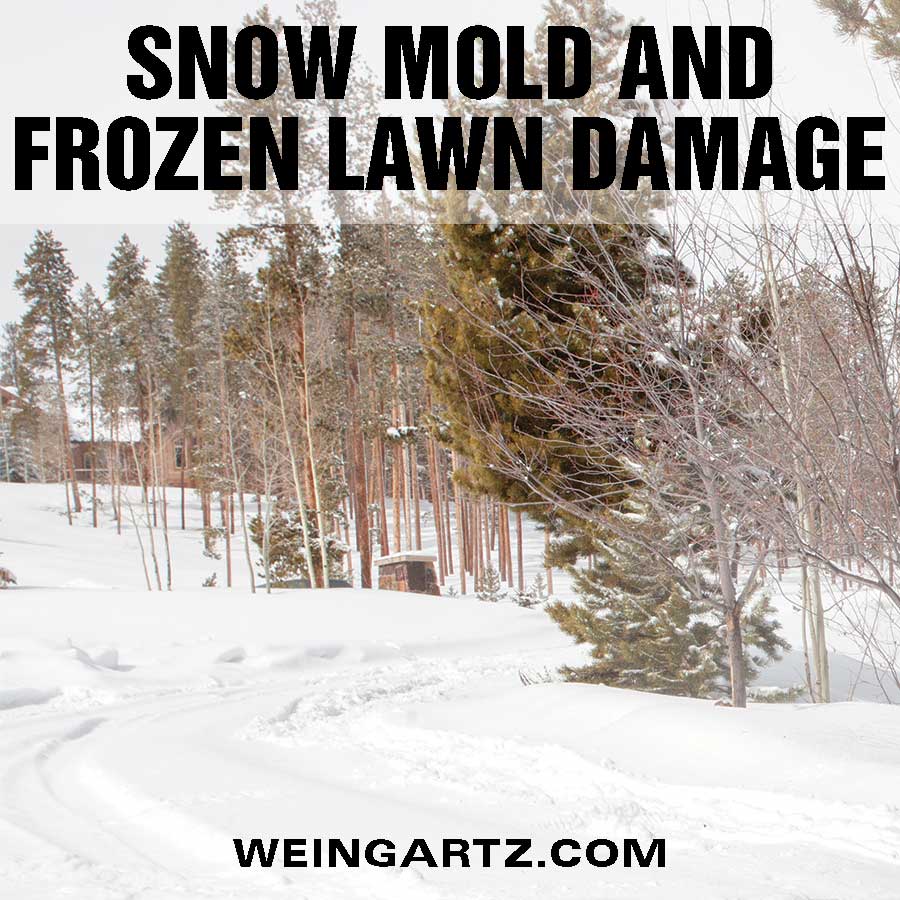

When thinking of winter, people rarely consider how winter’s weather conditions affect their lawn. Winter brings snow and freezing temperatures, which contributes to snow mold and frozen lawn damage. The winter season can have adverse affects on your lawn, but this damage can be undone. Read more to learn how to keep your lawn green and healthy.
Snow Mold Damage
One of the most common winter lawn diseases is snow mold. In areas where snow can cover your lawn for weeks at a time, grass can develop snow mold damage, which you’ll usually see after the snow melts. Snow mold leaves you with an unpleasant bleached-looking lawn.
The two most common snow mold diseases are gray snow mold and pink snow mold. Both are a type of fungus but are caused by two different fungal pathogens. Typhula incarnata causes gray snow mold and Microdochium nivale causes pink snow mold.
Gray snow mold shows up as white crusted areas of grass in which the grass is dead, matted together, and bleached. The bleached areas of your lawn can range from some inches to a few feet. Gray snow mold typically appears in areas with the greatest snow accumulation, such as along driveways where snow drifts tend to build up.
Pink snow mold is caused by a fungus that thrives in cool, moist areas. Your lawn can develop pink snow mold even without snow cover. This disease receives its name from the buildup of pink fungal spores on the leaves of infected grass plants, resulting in pink snow mold on patches of matted grass.
Tips To Avoid Snow Mold
There are a few preventative measures that you can take to help avoid both types of snow mold.
- Long grass is more susceptible to snow mold so mow your lawn until it stops growing. Remove leaves from your lawn in the fall and keep your lawn free of thatch. When we receive snowfall, those leaves can turn into a dense layer that restricts airflow and mats the grass. Additionally, keeping your lawn free of thatch helps ensure proper airflow, which prevents snow mold.
- If your lawn is suffering from snow mold in the spring, you need to dry out the affected areas because snow mold can spread when your lawn is cold and damp.
- Lightly rake damaged grass to reduce matting and increase airflow. Allow air and sunlight to reach the damaged areas of your lawn to heat up soil temperatures and dry out the grass.
- If your lawn has severe damage in the spring, apply a light fertilizer to promote new growth.
Frozen Lawn Damage
Snow isn’t the only thing harming your lawn during the winter; freezing temperatures and ice also contribute to lawn damage. The deterioration of your lawn comes from the destruction of your grass blades when they are frozen.
You have no control over winter’s unpredictable weather conditions, so to help avoid frozen lawn damage stay off of your grass as much as possible. Typically when you walk across your lawn, the grass blades are elastic and bend underfoot but remain undamaged.
During the winter, when heavy objects press down on the blades, expanded water molecules cut through the grass and cause significant cellular damage. So each time you walk across the lawn, you’re stepping on frozen grass blades, breaking them and damaging the lawn.
Your lawn will eventually recover from frozen lawn damage, but for now stay off the grass until temperatures rise.
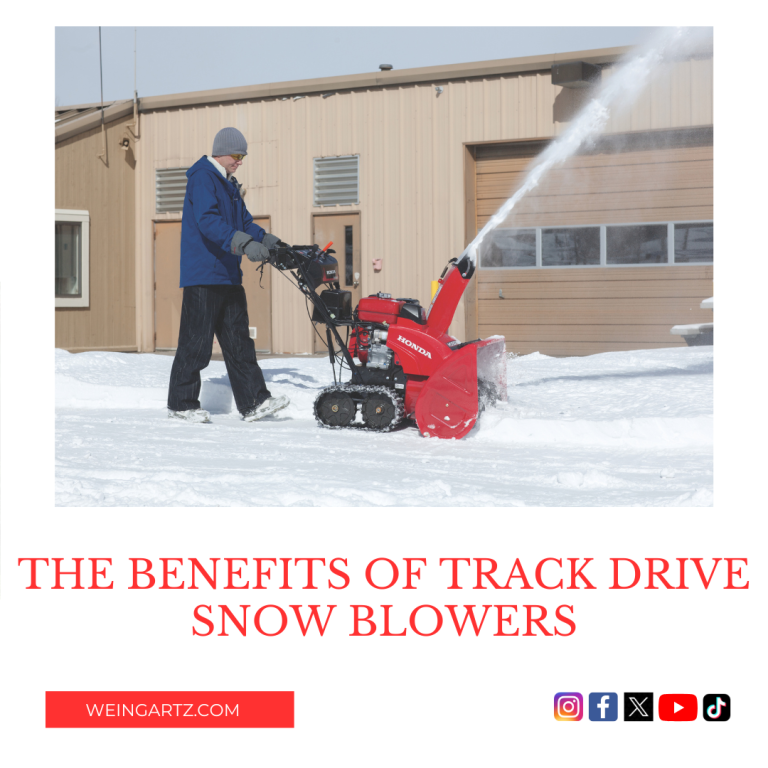
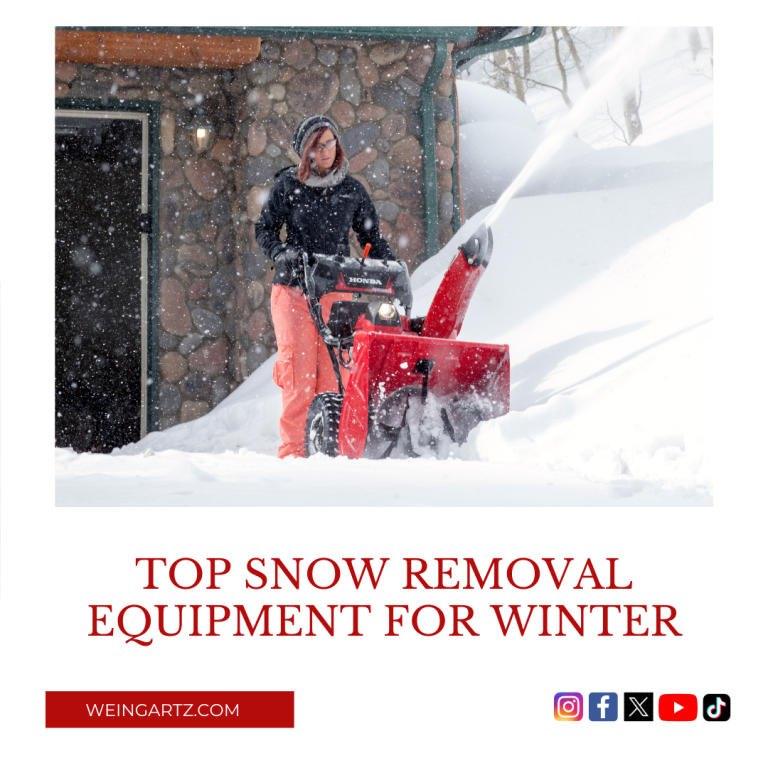
Snow and ice buildup on your walkways and driveway can also be frustrating during the winter. Snow blowers are built to efficiently remove snow allowing you to take care of business with little effort. These machines range from small single stage models to large three stage models that can remove snow, ice, and slush in seconds. Spreaders may also come in handy during the winter. They’re built to spread snow and ice melt, removing ice from walkways.
Email or call us at 855-669-7278 or stop by one of our stores for expert advice and to purchase your snow and ice removal equipment.
You May Also Enjoy These Articles:
How to Replace Snow Blower Paddles and Scraper Bars
6 Ways To Prepare For Winter Storms
How to Store Small Engine Equipment for Winter
Winter Chainsaw Safety: 5 Tips for Injury Prevention
Snowblower Safety: 6 Tips for Homeowners
Why Weingartz?
Weingartz, family owned and operated, began in 1945 as a farm supply store for local Michigan families. In the 1970s, we began to focus exclusively on outdoor power equipment. Over time, we morphed into the “power equipment superstore” that now defines all of our locations. The staff and experts at Weingartz work diligently to provide the best service possible and give honest and helpful advice to each and every customer.
Weingartz also sells parts for all outdoor power equipment at https://weingartz.com/parts-lookup.
Weingartz
46061 Van Dyke Ave.
Utica, MI 48317
(586) 731-7240
info@weingartz.com
Connect With Us!
https://www.facebook.com/WeingartzLawnToSnow
http://pinterest.com/MrWeingartz
Sign up for our electronic monthly newsletter for discounts and money-saving tips.
Learn More About Brand Specific Snow Blowers:


Sign up for electronic monthly newsletter for discounts and money-saving tips.